
Evidence 1: I Spy Learning Game
Element:
Enables Future-readiness
Indicator (from NECF):
“Implements strategies that require students to think critically and creatively, communicate ideas, and work with peers.”
Evidence:
I Spy Classroom Game
Description:
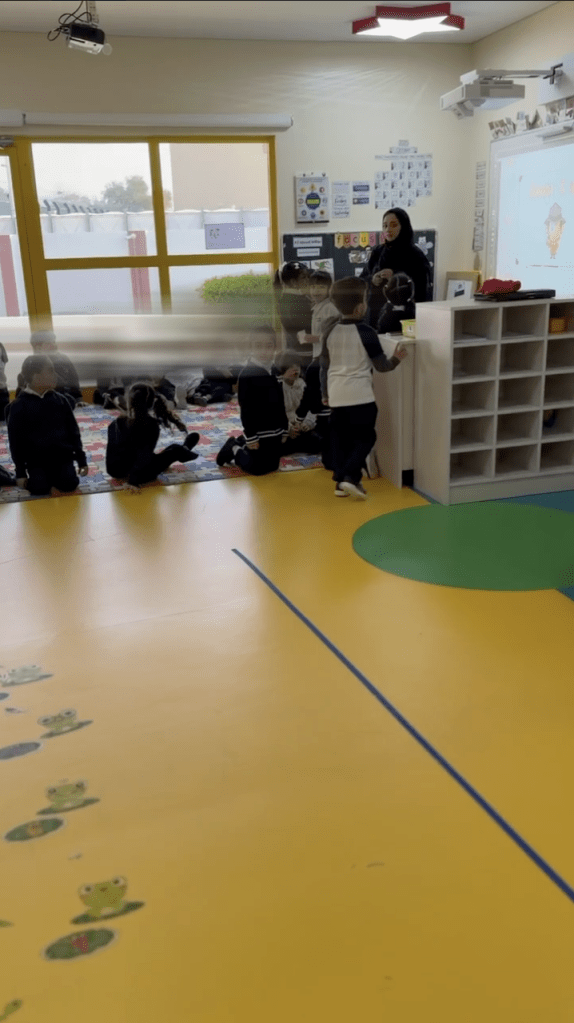
This evidence shows an interactive classroom activity using the “I Spy” game during the lesson. In this activity, students were asked to observe their surroundings and identify objects that begin with a specific letter sound. The teacher provided clues, and students searched for the correct objects in the classroom.
This activity encouraged students to develop observation skills, critical thinking, and communication while participating actively in the learning process. Through this game, students practiced recognising letter sounds and vocabulary in an engaging and collaborative way.
Evidence2: Hands-on Learning Activity with Blocks
Element:
Enables Future-readiness
Indicator (from NECF):
“Implements strategies that require students to think critically and creatively while engaging in hands-on learning experiences.”
Evidence:
Hands-on Learning Activity Using Blocks
Description:
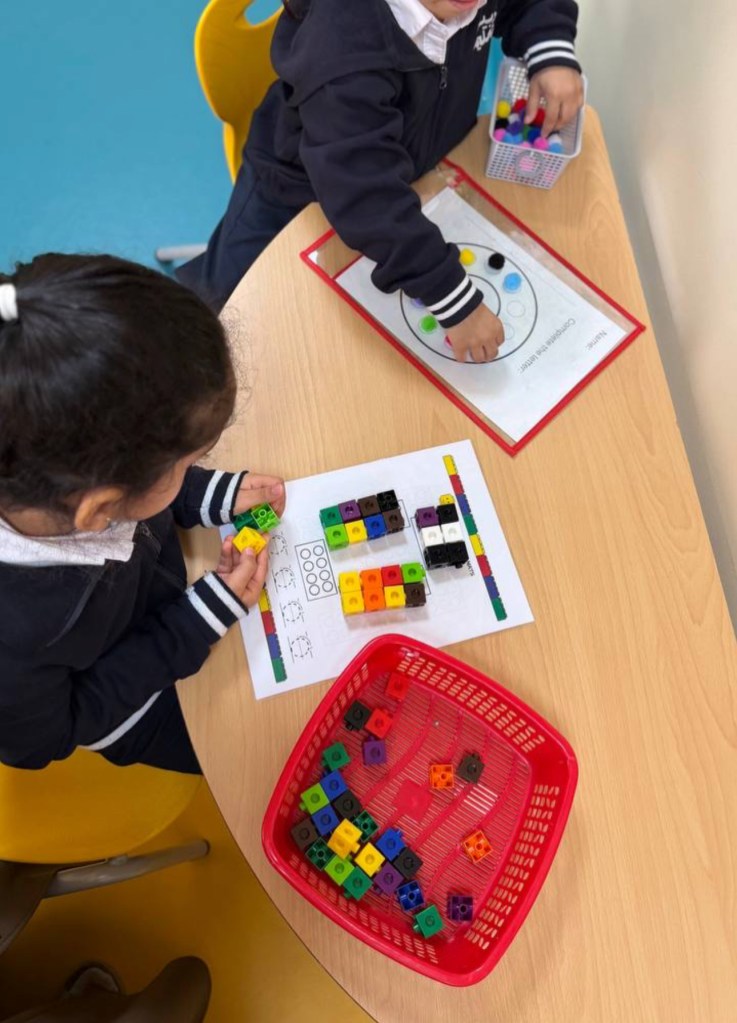
This evidence shows students participating in a hands-on learning activity using coloured blocks. During the activity, students matched the blocks with the circles on the worksheet and organised them according to colour and number.
The activity encouraged students to explore patterns, develop early numeracy skills, and engage actively in the learning process. Through this interactive task, students practiced problem-solving, observation, and fine motor skills while working collaboratively with their peers.
Evidence: Hands-on Shape Building Activity
Element:
Enables Future-readiness
Indicator (from NECF):
“Implements strategies that require students to think critically and creatively, communicate ideas, and work with peers.”
Evidence:
Shape Building Activity Using Manipulatives
Description:
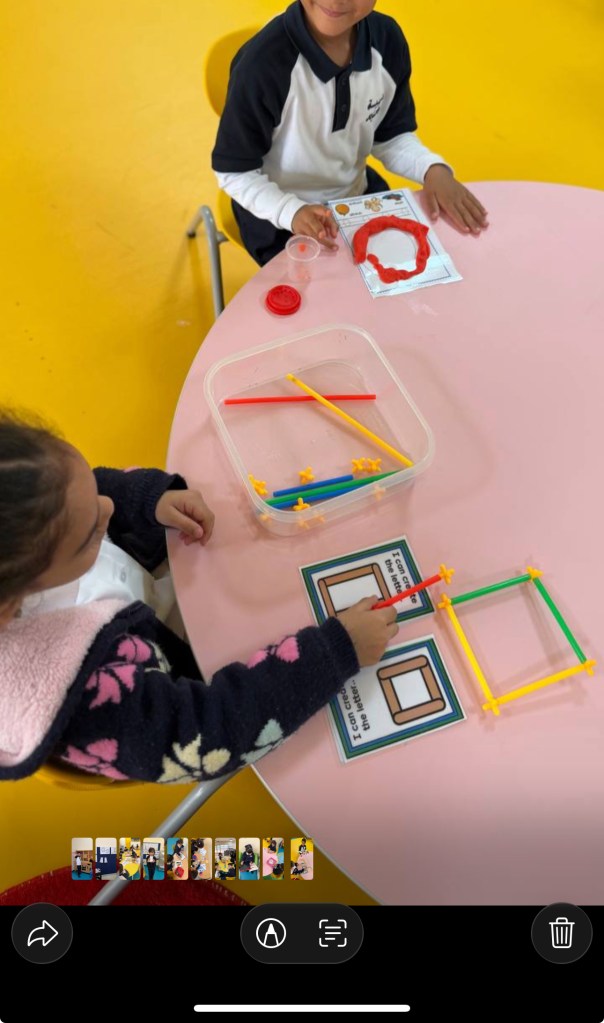
This evidence shows students participating in a hands-on activity where they used coloured sticks and connectors to build different shapes. Students followed the cards and worked together to construct shapes such as squares and rectangles.
The activity encouraged students to explore shapes, develop spatial awareness, and practice problem-solving skills. Through this interactive task, students engaged in collaborative learning while developing their creativity, fine motor skills, and early mathematical understanding.
 Hanan Aldhuhoori 025003 E- Portfolio