
Evidence 1:
Element: “Enacts Differentiated Teaching Strategies“NECF (ECAE, 2024)
Indicator: “Designs inclusive learning experiences that meet diverse learners’ needs“NECF (ECAE, 2024)
Description 1 :
Throughout my practicum, I strengthened my ability to plan and analyse lessons critically, linking theory to classroom practice.
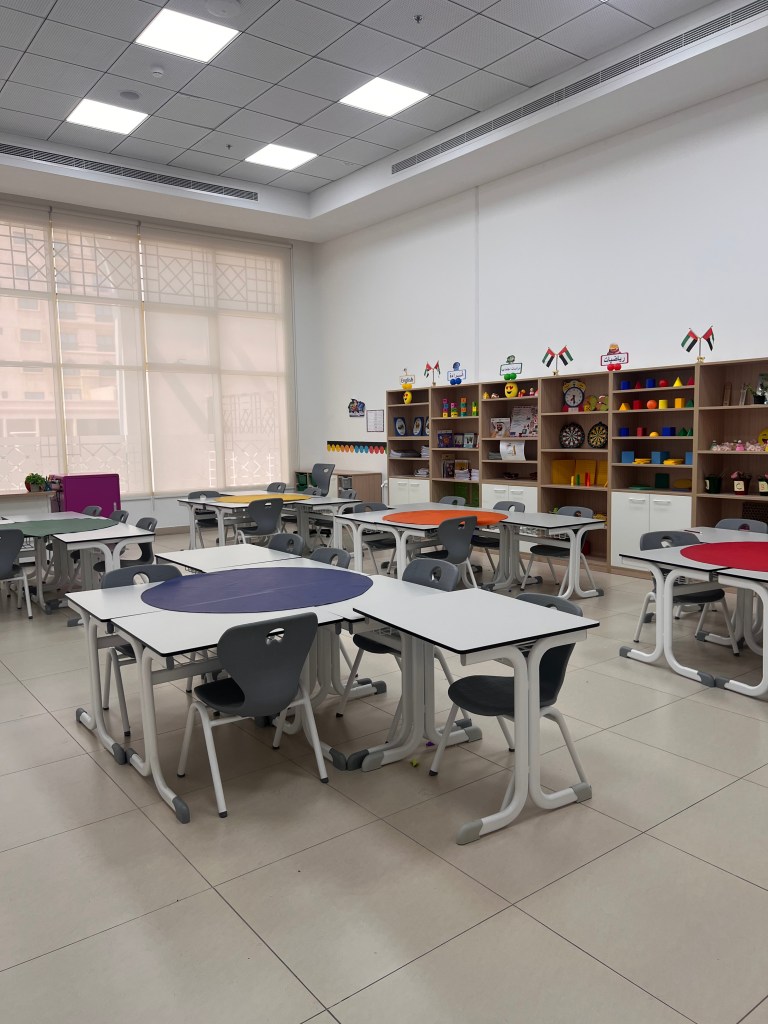
In a Grade 2 mathematics lesson on addition and patterns, I recognised that grouping students strictly by ability limited inclusion and interaction. According to the UAE National Educators’ Competency Framework (ECAE, 2024), effective professionals “design inclusive learning experiences that meet diverse learners’ needs.”
To align with this, I suggested adopting mixed-ability groupings that promote peer learning and scaffolded support, following Vygotsky’s (1978) concept of the Zone of Proximal Development (ZPD).
Evidence: Reflection and revised math lesson plan on mixed-ability grouping.
Description 2 :
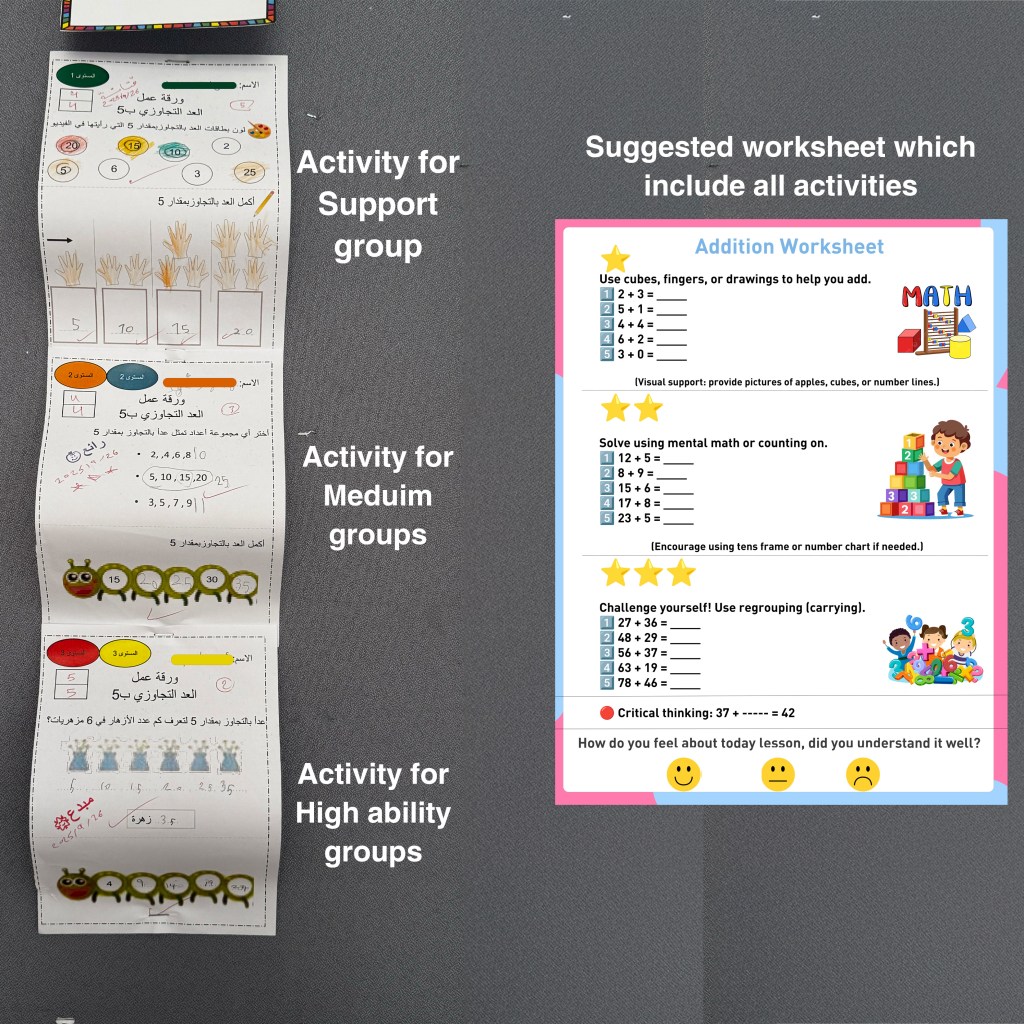
Moreover, I noticed that the lesson activities were pre-designed for fixed levels, offering no opportunity for students to extend their learning beyond their current ability.
To promote continuous growth, I proposed revising the worksheet so that all learners could begin at their comfort level and gradually progress to more challenging problems within the same task.
This approach supports scaffolded differentiation, allowing students to move flexibly between levels while maintaining engagement and confidence.
Evidence:
Observation notes highlighting the need for progressive, stretch-based activities and a revised worksheet enabling learners to advance within the same task.
Evidence 2:
Element: “Enacts Pedagogic Practices“NECF (ECAE, 2024)
Indicator: “Adapts instructional approaches to meet diverse learners’ needs and supports active engagement“NECF (ECAE, 2024)
Description:
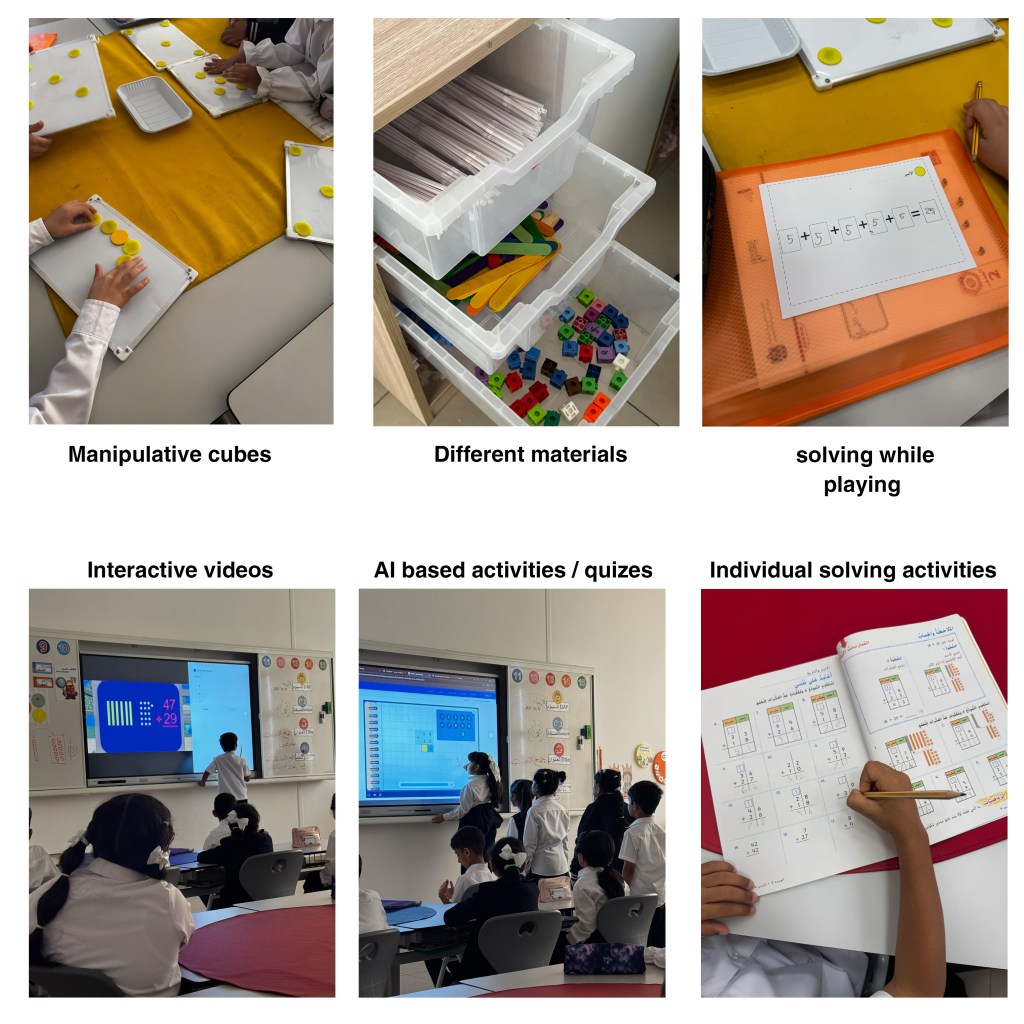
The teacher effectively applied the Universal Design for Learning (CAST, 2020) by using multiple teaching strategies — visual videos, manipulatives, and AI-based quizzes — to reach different learning styles. Inspired by this observation, I plan to expand such strategies by integrating peer discussions, cooperative games, and scaffolded group work, where logical learners solve equations, creative learners design patterns, and verbal learners explain strategies.
This combination ensures engagement for all students and embodies differentiated instruction that supports autonomy, collaboration, and active participation.
Evidence:
Lesson reflection analysing multiple teaching strategies based on UDL.
Evidence 3:
Element: “Enacts Pedagogic Practices“NECF (ECAE, 2024)
Indicator: “Applies effective instructional strategies to support students’ understanding and learning progress.”NECF (ECAE, 2024)
Description:
From the SLEF feedback, my mentor acknowledged my growing ability to use feedback and observation to refine teaching strategies.
She stated:

This evidence reflects my development as an Effective Professional who values reflection, adaptive teaching, and student-centered learning. It demonstrates my ability to adjust instructional strategies responsively to enhance students’ progress and engagement.
 Hanan Aldhuhoori 025003 E- Portfolio